A Roadmap for Safe Drinking Water
Morrow and Umatilla Counties are facing a decades-long problem with elevated levels of nitrate in
groundwater in northern parts of the two counties. This affects thousands of rural residents who rely on wells
for drinking water. The Oregon Department of Environmental Quality (EPA) designated the affected region as
the Lower Umatilla Basin Groundwater Management Area (LUBGWMA) when problems were first recognized
in 1990.
Through a joint effort of Morrow and Umatilla Counties, the Drinking Water Roadmap Project was launched in
2024 to study safe and reliable drinking water solutions for domestic well users. The Roadmap Project is
funded through a research grant from the EPA and is being managed by the Morrow County Planning
Director (“Principal Investigator” under the EPA grant) with a consultant team led by GSI Water Solutions, Inc.
to conduct the work.
Schedule Update
Due to some additional reviews and information being added to the Draft Roadmap Action Plan, there have been some schedule changes in finalizing the document.
The following are the remaining key milestones for the Roadmap Project including opportunities to attend meetings related to the project:
- October 19, from 3:30 - 5pm: The steering committee will meet to finalize the Draft Action Plan at the Morrow County Government Center, Don Adams Conference Room, 215 NE Main Ave., Irrigon, OR. This will be a hybrid meeting which is open to the general public. Click here to view the agenda and log-in information for this meeting.
- October 30: Pending action by the Streeting Committee on October 19, the final Action Plan will be posted to project website and distributed to counties and state agencies.
- November 10: Final action plan will be presented to Morrow County Clean Water Consortium Board meeting.
- November or December 2026: Final action plan will be presented to the county commissioners at Morrow County and Umatilla County.
Dates and activities above are subject to change.
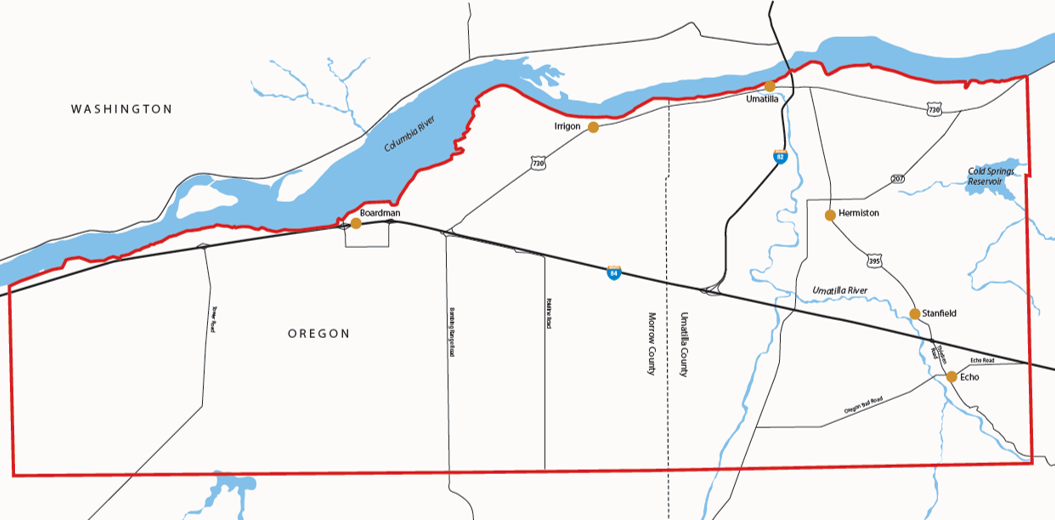
Lower Umatilla Basin Groundwater Management Area





Why It Matters
Find Lasting Solutions
The Drinking Water Roadmap is a multi-stage effort to identify long-term solutions for residents of Morrow and Umatilla Counties who rely on private wells for drinking water. Elevated nitrate levels have been a decades-long challenge in parts of the LUBGWMA, and this project aims to turn years of data into practical solutions that ensure safe and reliable drinking water for the future
Timeline: Through 2026
The Drinking Water Roadmap is being conducted in four stages over 2 ½ years. Stage 1 began in Spring 2024 and focused on developing workplans, initial water sampling and data gathering, preliminary outreach to well owners, and conducting baseline assessments of the study area.
The drinking water roadmap is now in the final stage of the project that incorporates the findings of potential feasible solutions in a Drinking Water Action Plan (DWAP) that will be available in August 2026.
This plan will present recommendations for implementing long-term solutions to address nitrate contamination in domestic wells in the region.